01 / Place
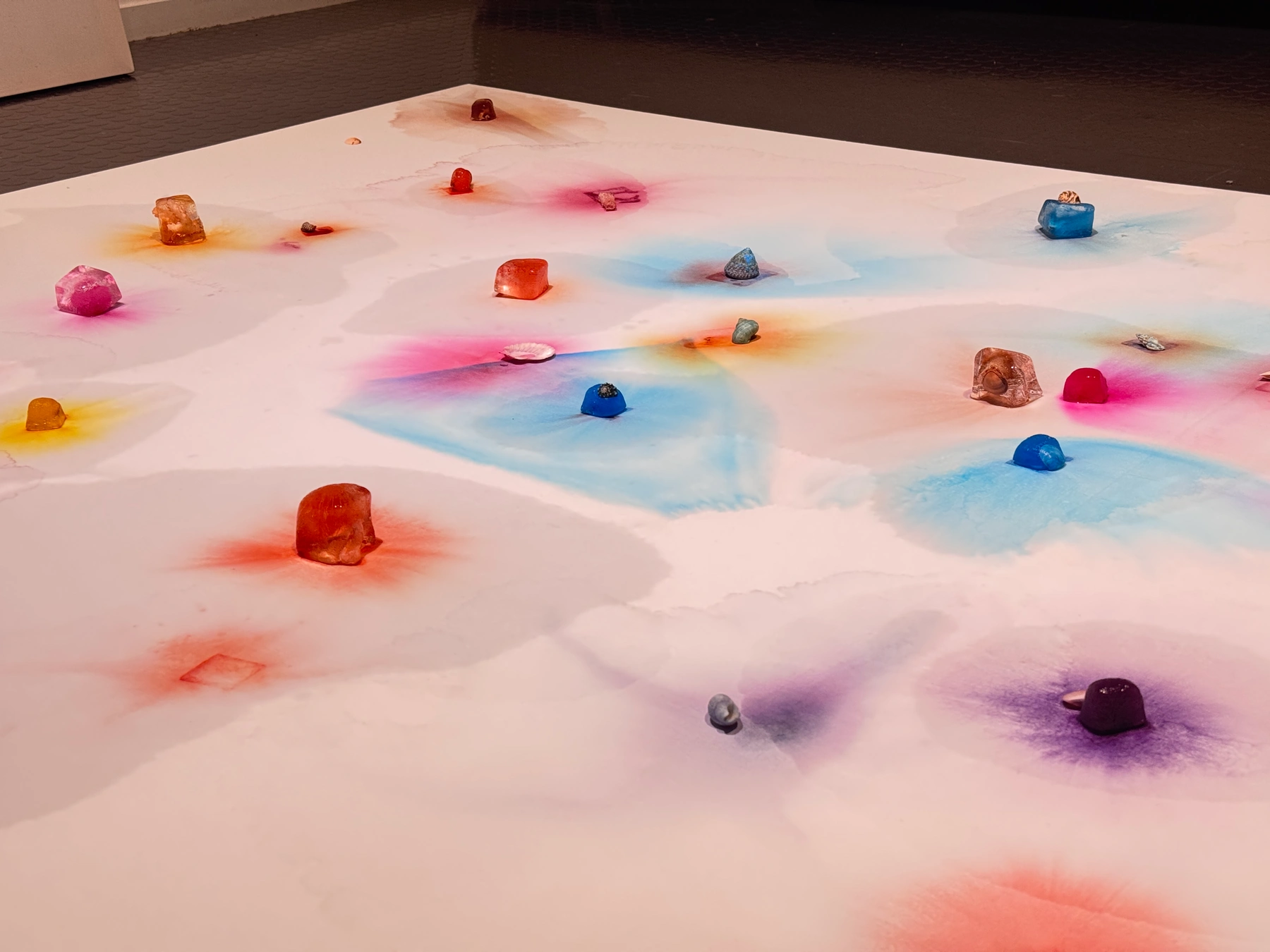
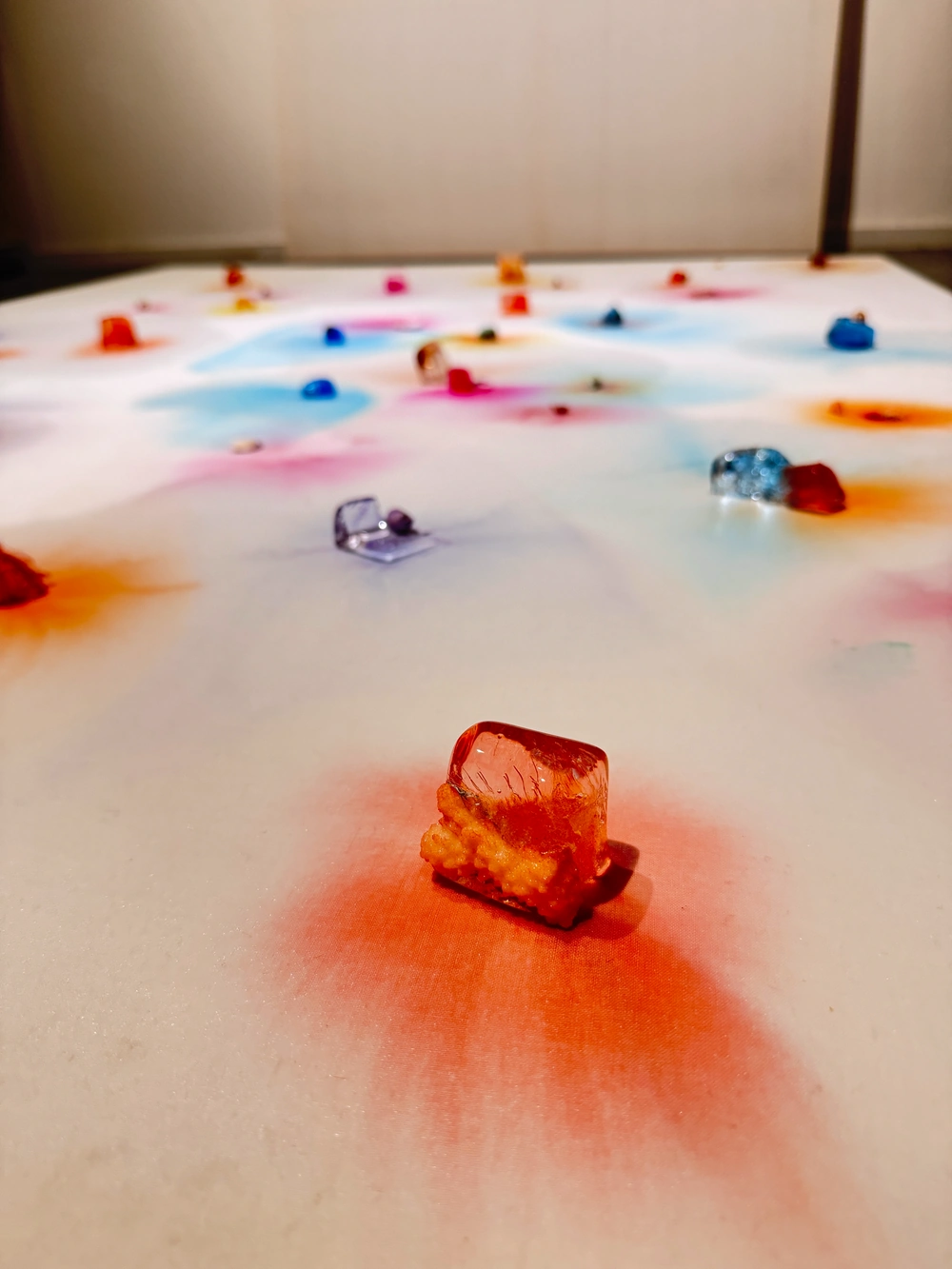
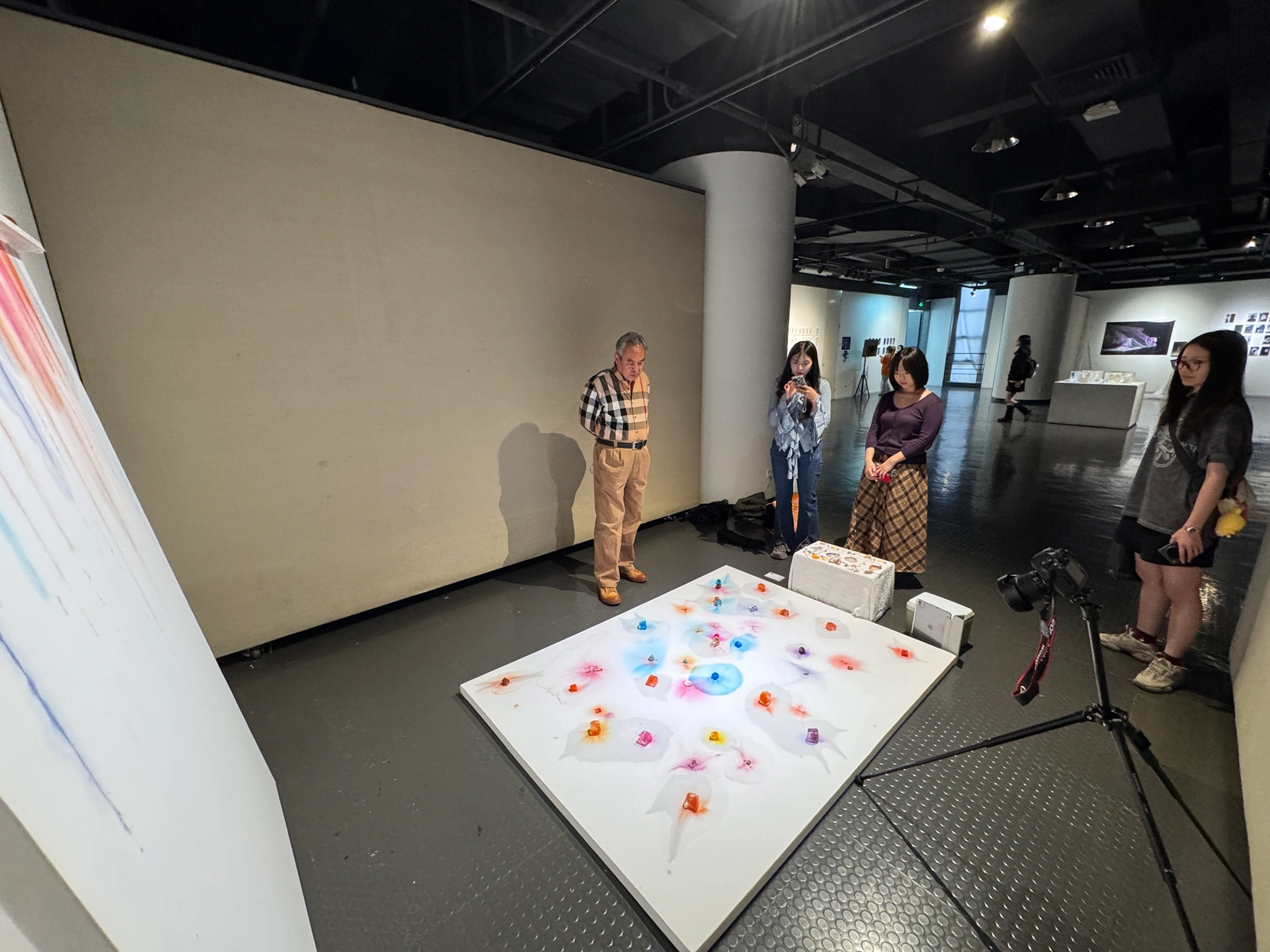
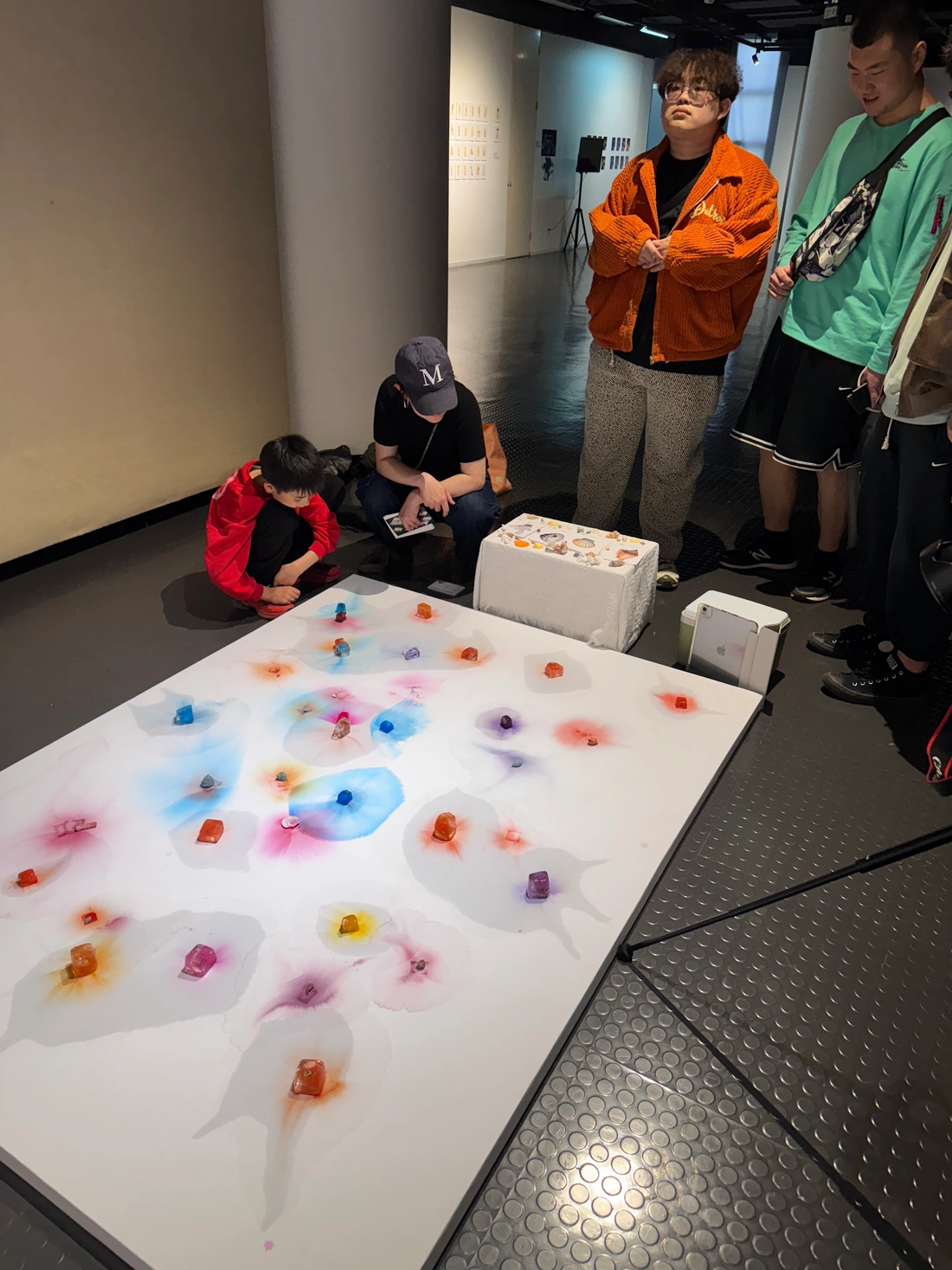
Visitors choose the ice blocks and where to place them. As each block melts, colour begins to spread from that spot.
Individual experimental art project
THE SILENCE OF WHITE
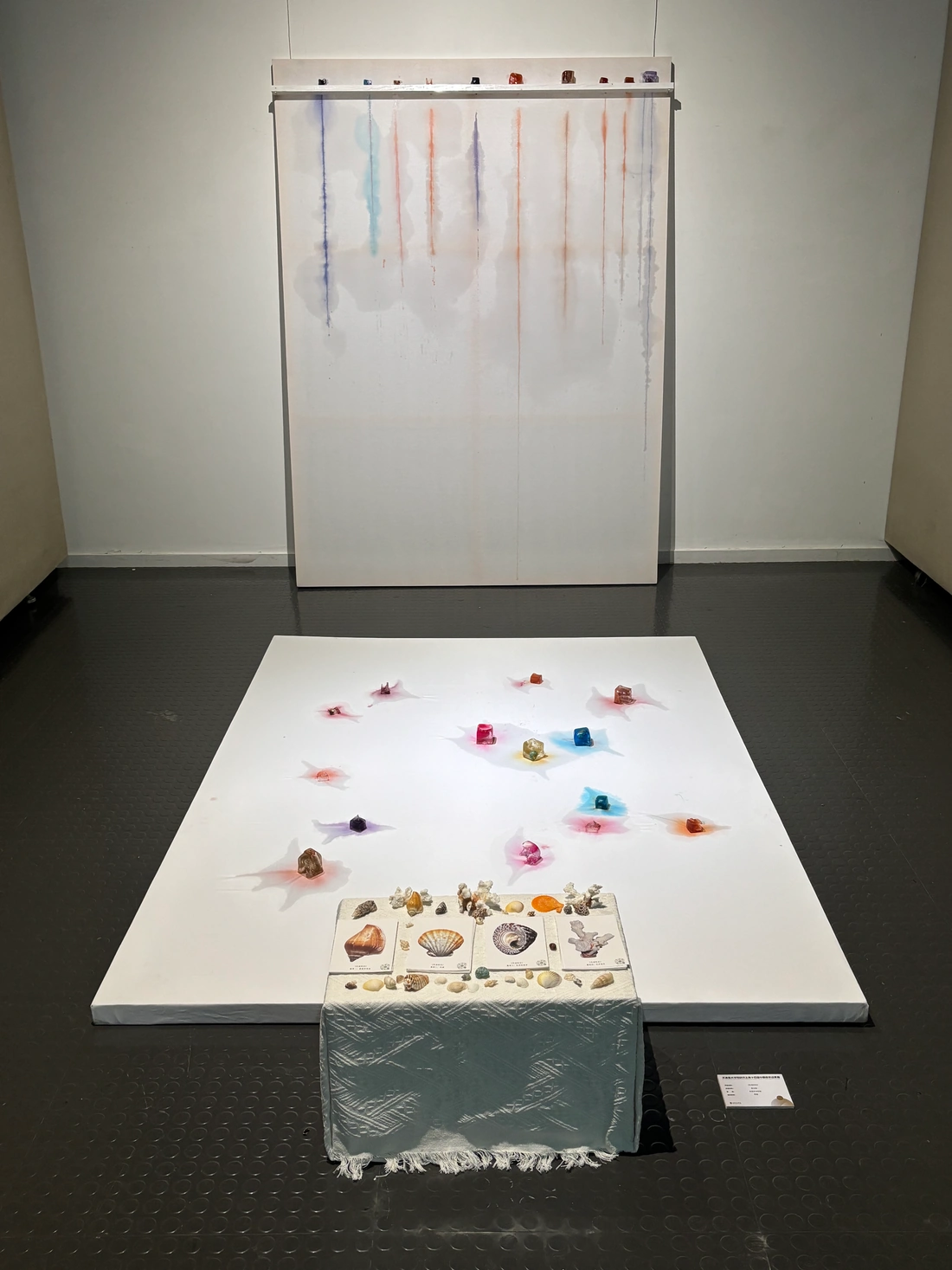
The Silence of White is a participatory installation about coral bleaching. Visitors place coloured ice on white canvas and watch the colour spread and fade as the ice melts. Four postcards connect to four AR stories that explain the environmental context.
As a child, I saw pale coral remains by the sea without understanding what they meant. When I later learned about coral bleaching, those images came back to me and became the starting point for The Silence of White.
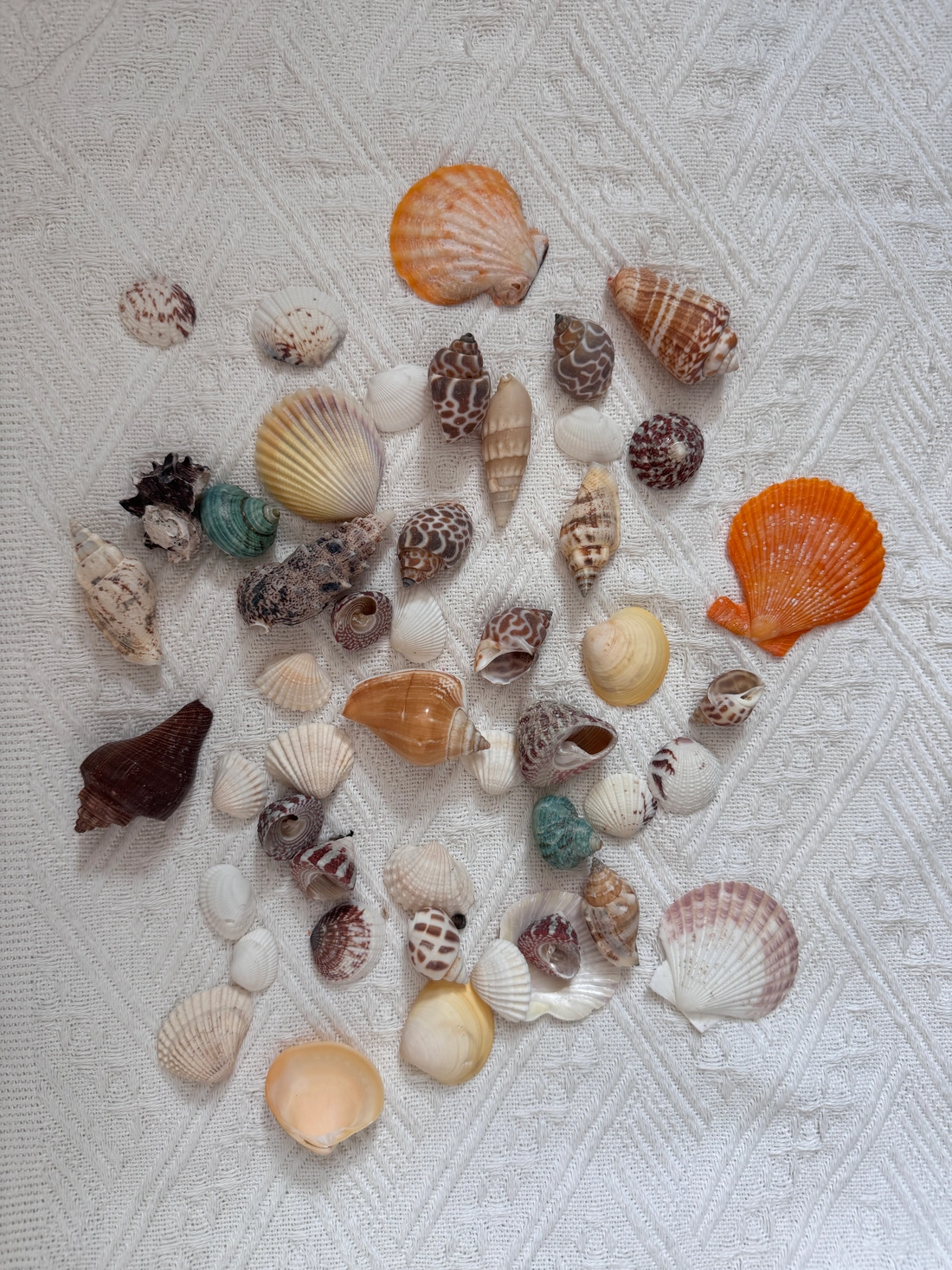
I wanted visitors to see colour change over time, so I chose coloured ice, white canvas and shells, making melting and changes in colour part of the work. The installation explores my concern about coral bleaching; it does not precisely simulate the biological process.
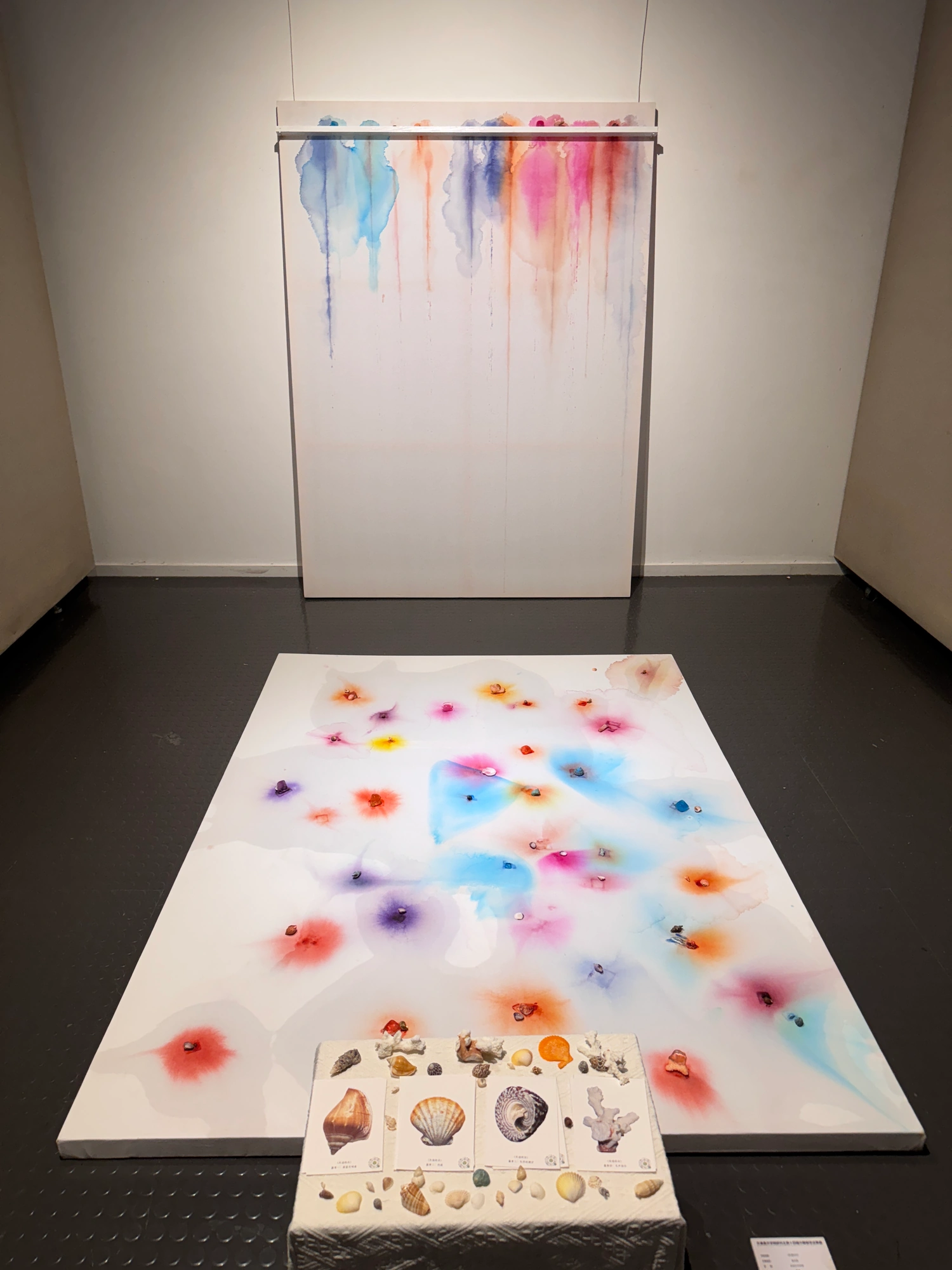
Visitors decide where to place the ice. It then melts slowly, spreading colour across the canvas. These photographs and videos record the work at different points in time.
Visitors choose the ice blocks and where to place them. As each block melts, colour begins to spread from that spot.
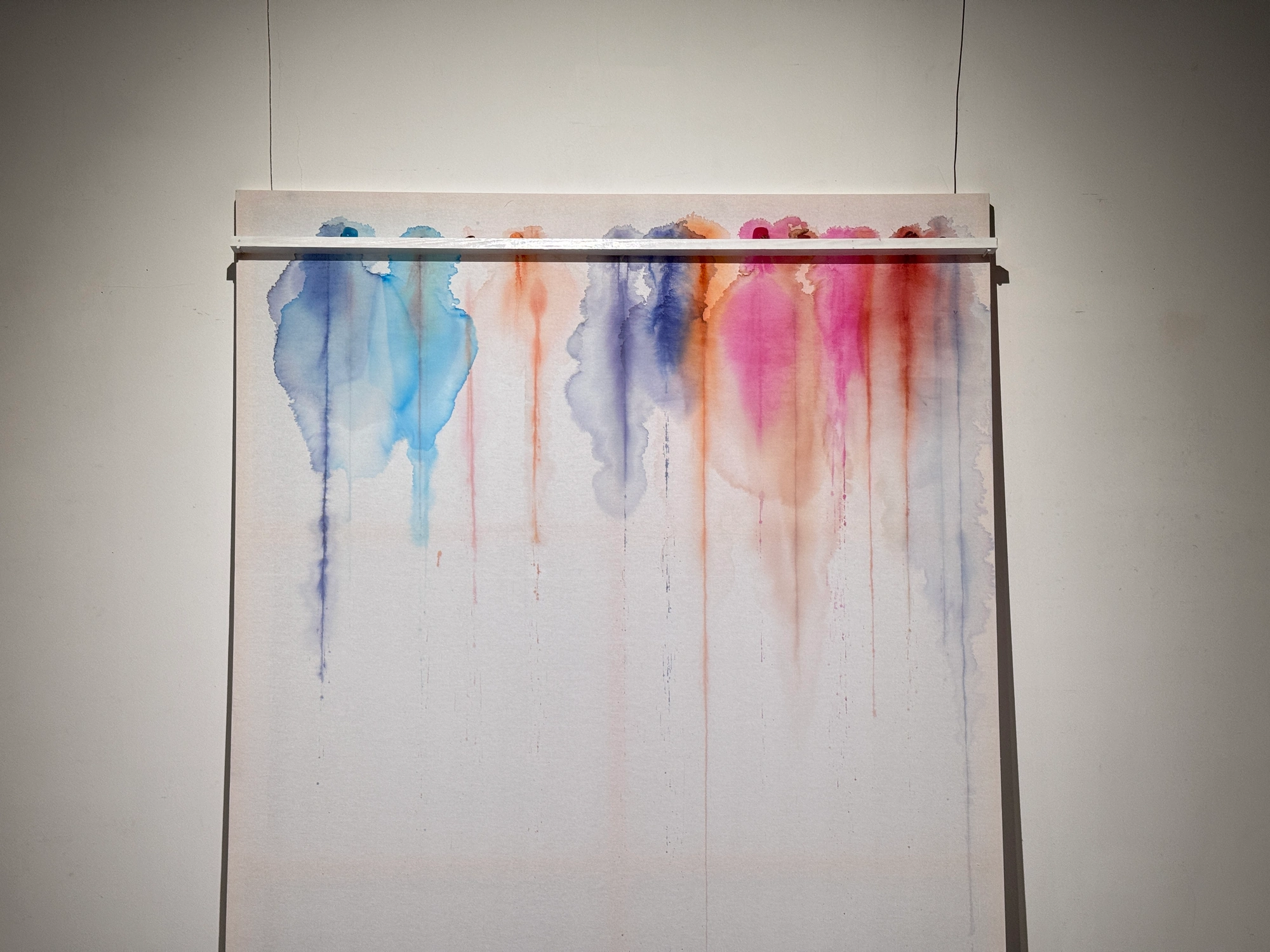
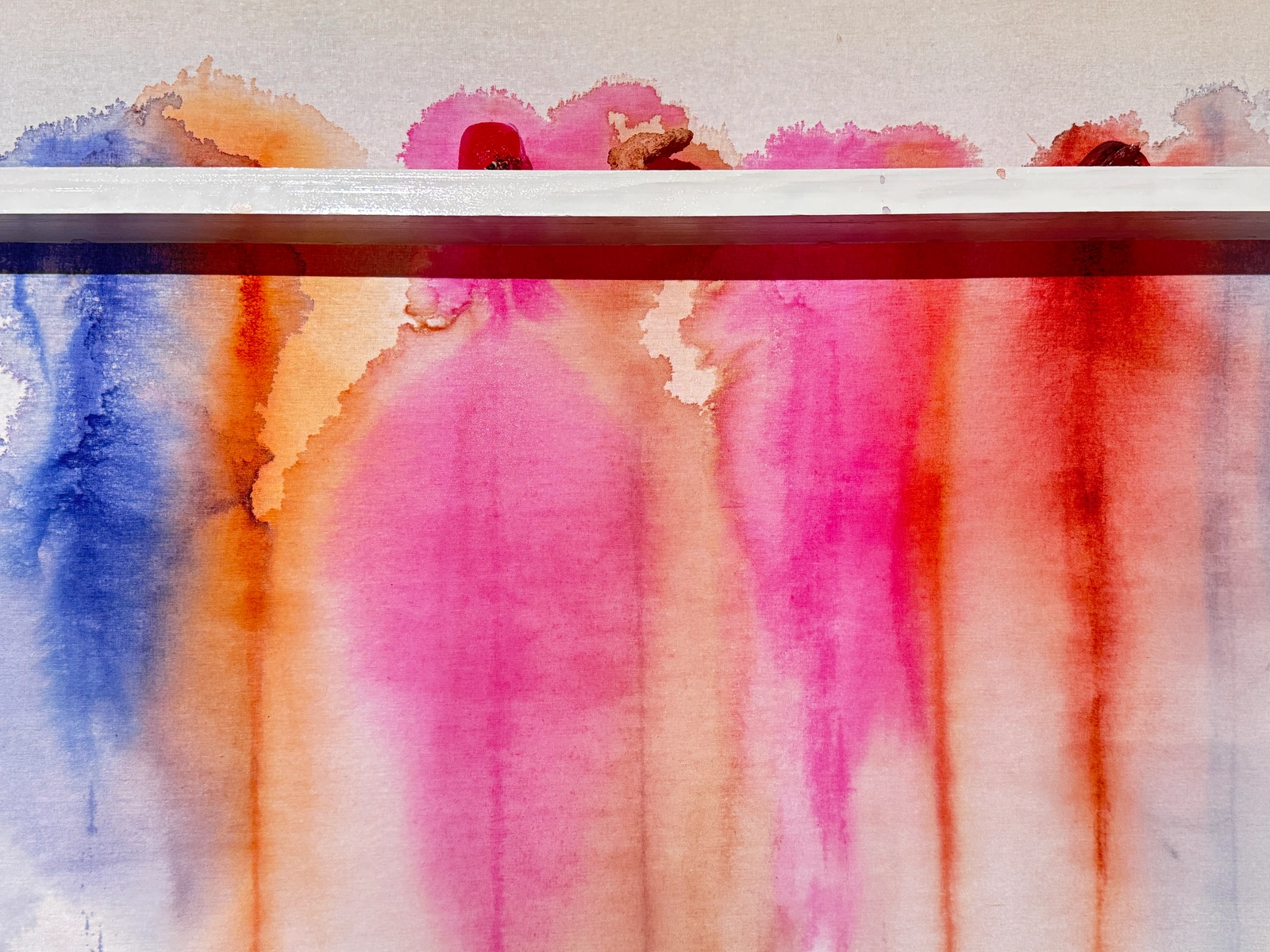
As the ice melts, colour spreads across the canvas on the floor. On the separate hanging canvas, colour runs downwards, with different colours overlapping and leaving lighter and darker traces.
As the ice gradually melts, colour spreads across the canvas while shells and other materials stay where they were placed.
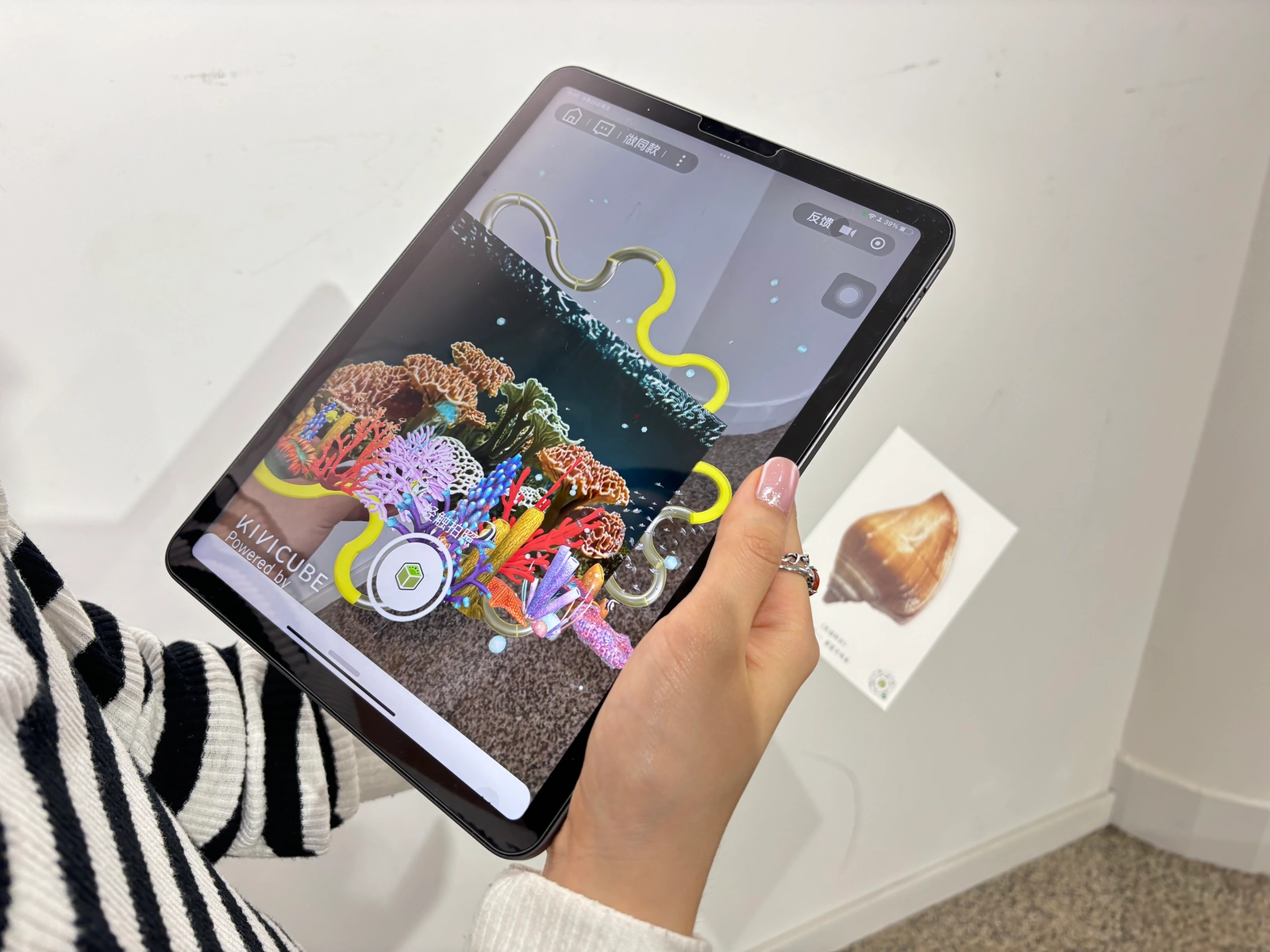
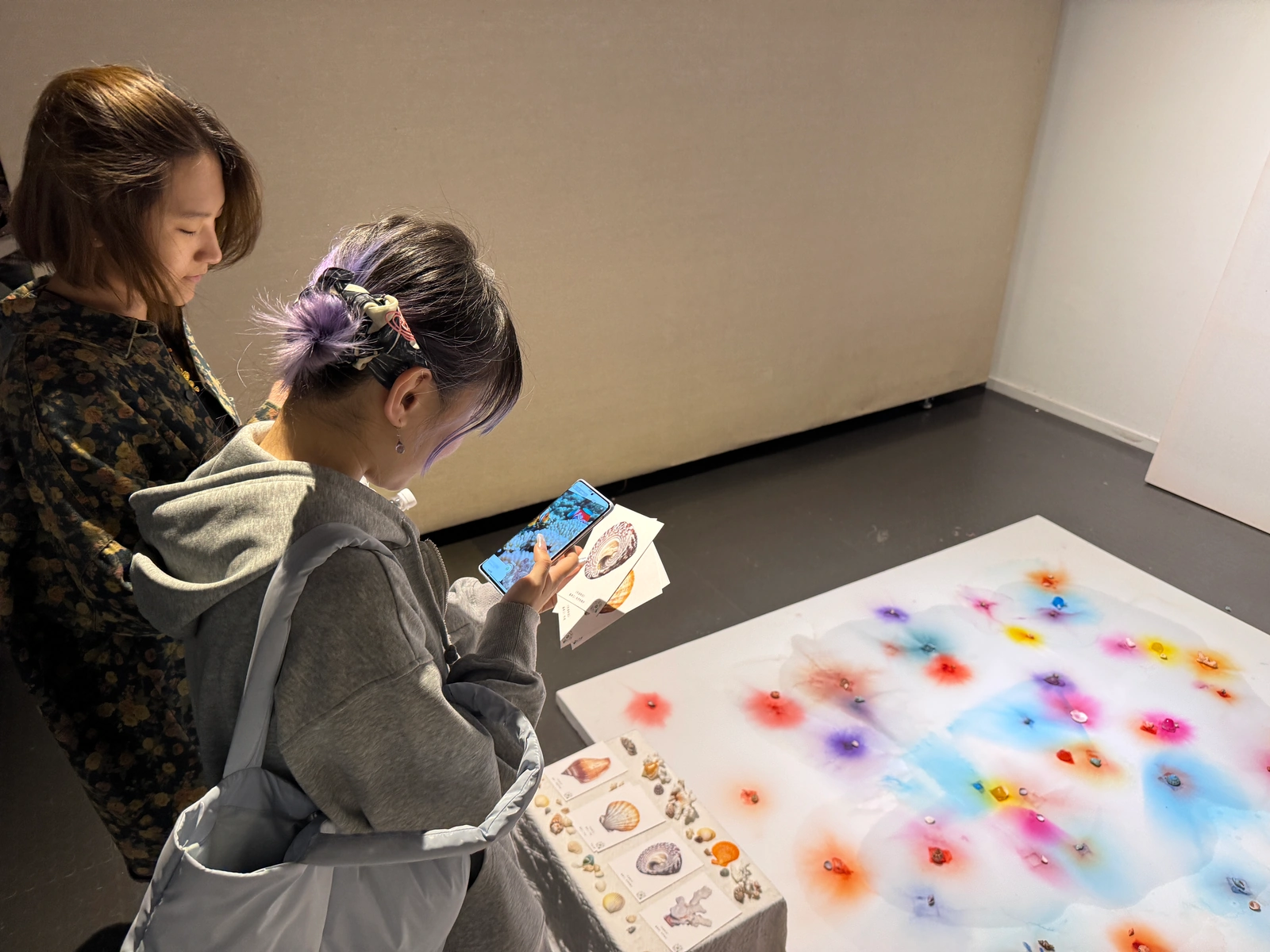
Melting ice shows changes in colour, but cannot explain all the environmental issues behind coral bleaching. I designed four postcards with QR codes, each opening an AR chapter, to tell a connected story about the pressures affecting coral environments.
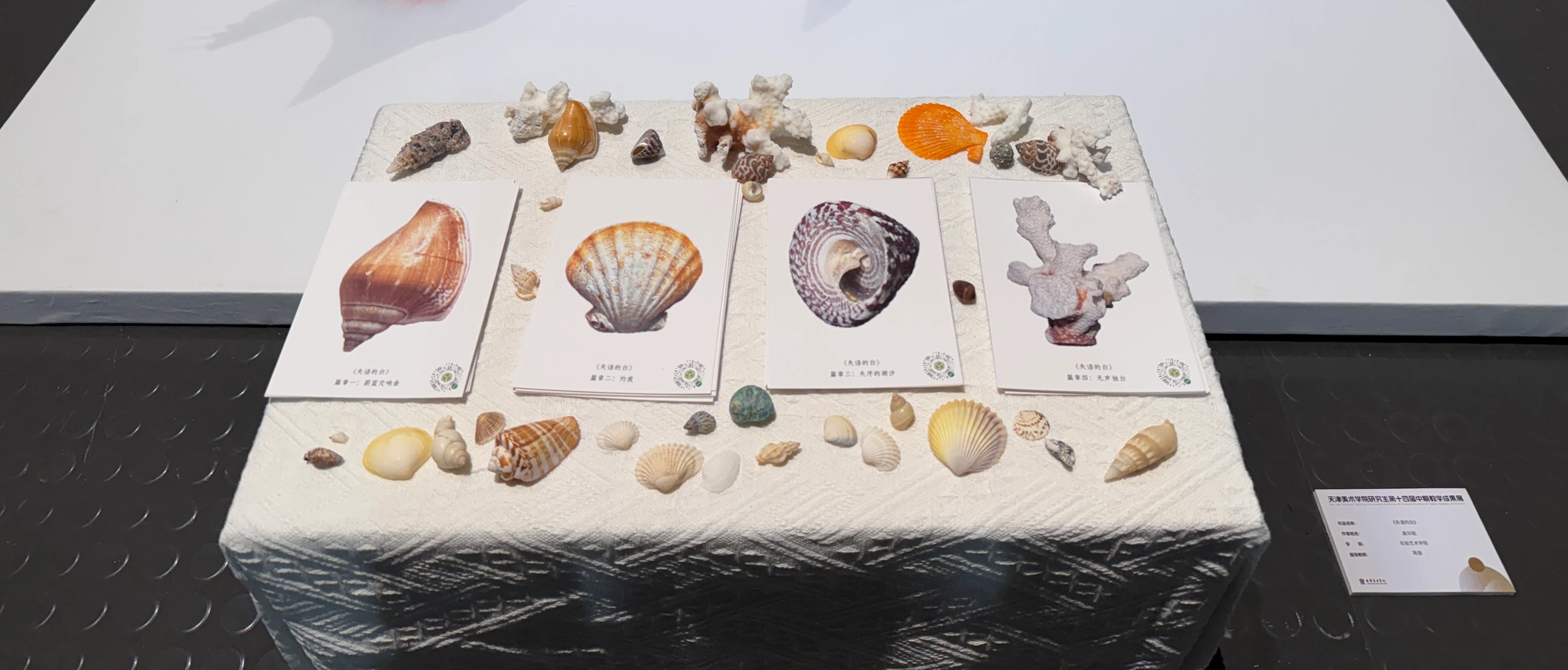
Chapter 01
The first chapter shows colourful coral and marine life.
Chapter 02
The second chapter brings human activity and pollution into the scene, showing disturbances to the marine environment.
Chapter 03
The third chapter focuses on how environmental changes affect coral and other marine life.
Chapter 04
An hourglass, seabed waste and a hermit crab using a discarded drinks can as its shell appear in sequence. The story ends in a pale coral environment.
At the exhibition, visitors could choose and place coloured ice, and view AR content through the postcards. As the ice melted, the installation continued to change.
Artist’s reflection
At the exhibition, visitors chose where to place the ice, changing the distribution of colour and traces on the canvas. Looking back, I cannot tell from their participation alone whether they understood coral bleaching.
The project made me realise that getting someone to take part and helping them understand what a work is saying are two different things. In my later interaction design work, I began to pay more attention to the connection between them.